How Do You Know if the Freelance Job Is Legit on Freelancer.com
In recent years, there has been e'er-growing interest in freelance work and it has rightly too led to more business organization well-nigh freelancer scams. Taking reward of people in need of jobs or a side income, scammers pretend to be employers (or even "helpful" swain freelancers) to trick workers into giving abroad their information and money.
Then as an independent contractor, how can you recognize freelancer scams and protect yourself? This post will take you through 11 of the most mutual scams forth with tips as to how you can avoid them.
❗Disclaimer: Below are some experiences we've heard of from freelancers, they're not accented signs. Please conduct this in mind every bit you read and reflect on your own experience.
1. An piece of cake job for a loftier pay
If you come across a task posting that is simply too proficient to be truthful, it probably isn't a legitimate job posting. In a freelancer scam similar this, you lot probably won't get the advertised payment for your service. In some cases, the "client" might not even be looking for your service altogether — they may be trying to have your information or bring you into a pyramid scheme.
Tip: Practise your research thoroughly
To avoid falling into this trap, you should have a good grasp of your field. Scan a lot of job postings and find out the average rate and the common responsibilities of your platonic task. This way, you'll observe when something is unnatural. For instance, you will find that $1,400 is a reasonable fee for a developmental editing project, simply information technology'south peculiarly high for a remote proofreading job.
You might also discover that legitimate freelance jobs tend to be posted on marketplaces that focus on sure niches rather than general platforms similar Upwork, Fiverr, or Freelancer.com.
2. Having to pay for access to piece of work
A scam of this kind comes in several forms. The customer could enquire the freelancer to pay a eolith or, more than commonly, they could brand it a requirement for them to buy something to set up your workstation then y'all tin hands work from domicile. Information technology might be a software or product of theirs that they claim is crucial to the project. Regardless, they make you send money in order to do your task.
❗ Annotation: This is dissimilar from paying sites like Upwork for extra bidding powers. Money paid to such sites is optional, not compulsory.
This is uncommon practice for whatever industry. If the client truly needed you to have access to some specific resources to complete their project, they would've stated that in their job description and possibly provided it to you lot on their own terms.
Tip: Never pay to start working
The solution to this scam is simple: decline any offer that asks you to pay!
3. Requests for extensive communication off-platform
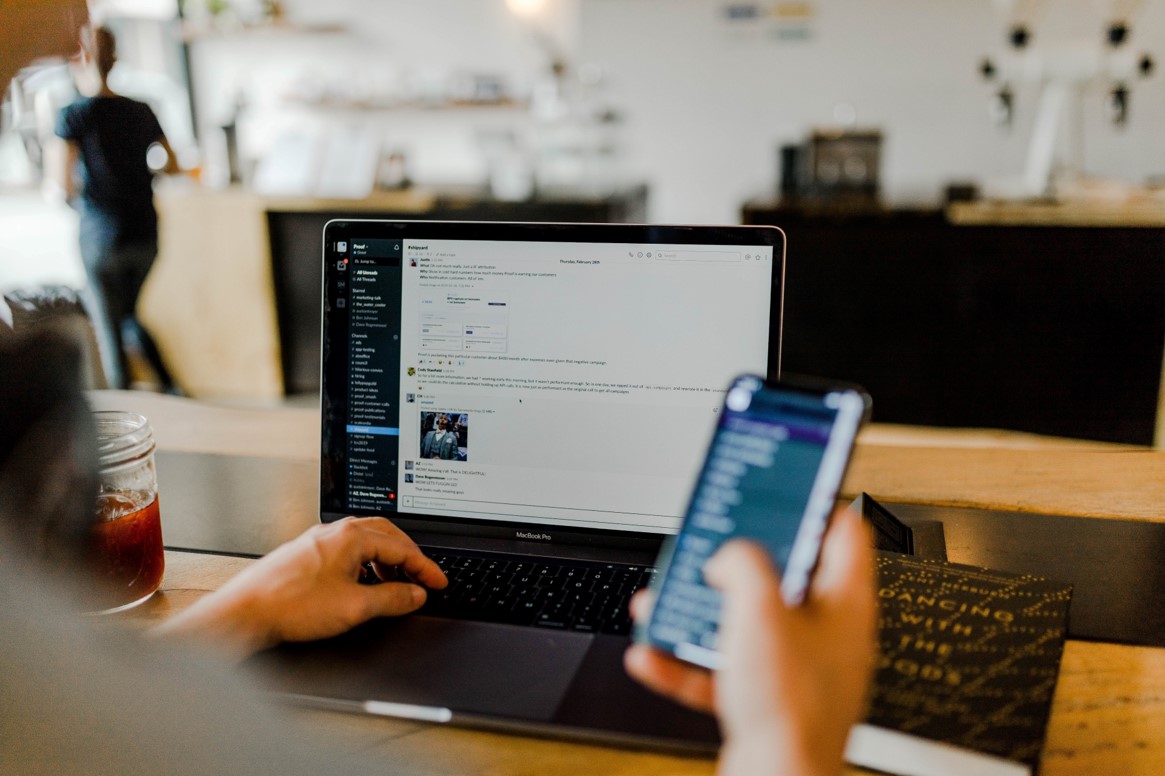
A lot of new freelancers work on sites similar Freelancer and Upwork — and if yous do, you'll know that conversations, piece of work commitment, and payments are commonly made through the platform. Reedsy also provides collaborative channels that help you lot keep track of your work progress. Should any problem arise, you can always get back to find solid evidence to back your complaint.
As such, when a client asks to hash out work extensively off the platform, you should raise your guards. With the exception of quick Skype or Zoom calls to get to know ane another or better mankind out the project, existence asked to communicate off-platform should raise major red flags.
Tip: Stay on professional person channels of communication
The best fashion to keep yourself safe is to say no to clients' requests to utilize a unlike platform when it comes to work. You can still have calls with them — but always make sure that you write down whatsoever important work-related understanding made and send information technology to them for confirmation after the talk. Other than that, work discussion and exchanges should happen on your called freelancer platform to keep your project safe.
For those who don't use freelance sites, exist sure to have a professional person electronic mail account reserved for freelancing earlier you go started. It's better to be rubber than pitiful — you don't want to use individual accounts and give away personal data by accident.
4. Unnecessary "examination" projects
Test projects are by no means all scams, which is why avoiding this trap volition be a scrap tricky. When a client is interested in your contour but you lot don't have a lot of experience to go with it, the client may ask for you to complete a chore or ii as a test. Normally, this is a chance for beginners to demonstrate their abilities.
However, this recruitment process can likewise exist exploited past those who don't want to pay for your service. By asking freelancers to send in their sample work, the customer can have satisfactory products without having to spend anything. All they'd have to say is that you weren't the right friction match for them, and they'll cull some other freelancer.
Exploitative projects tend to exist more circuitous and time consuming than a regular test. They'd also likely come from independent employers or small-scale enterprises who don't clearly outline the recruitment procedure in their job description.
❗ Notation: Many task marketplaces vet their applicants through tests. If the purpose of the test is clear and the site is reputable, it's probably non a scam.
Tip: Transport minimal free samples
Being asked to send a sample is not completely unreasonable, every bit information technology is a mode for clients to approximate your ability. However, for a freelance gig, this sample should exist a relatively minor task compared to the projection described by the customer. Requests for more than 1 assignment is not a good sign.
One of the commonest freelancer scams is this: a client or boyfriend freelancer approaches you, claiming they could help you make thousands of dollars using your existing Upwork or Freelancer.com account. All you accept to do is give them access to it — share it with them — and they'll exercise some tech-wizardry to grow your freelance business and bring in the cash. Once that happens, you'll split the gains.
If you agree to this proposal, this new "partner" wouldn't be doing whatever growth hacking for y'all — though they would get access to your bank and ID information. Moreover, they probably will drag you into more elaborate scams as an accomplice (more on that in scam #6).
When you receive a proposal like this, ignore it. If they wanted to growth-hack something, they would've focused on their ain sites.
💡 Want to be a more than successful freelancer? We accept a post outlining xx powerful freelancing tips you might find helpful.
vi. The unsolicited bank check
In this scam, the customer mails a cheque to y'all before you fifty-fifty practise whatever work. They might say that it's a prepayment, and the cheque's value could be even higher than your quote. Perhaps they claim it includes some other worker's pay, or money that you should send away on the company's behalf. The "customer" volition even provide y'all with details of this third party — profiles they've tricked other freelancers into sharing with them — and so everything appears believable. What you'd have to exercise is cash out the money and deposit information technology to a given account.
If you retrieve this all sounds fishy, that's because it is. You'd notice, later on you've cashed and sent the money away, that everything came out of your account. Your "client" has sent you an illegitimate cheque to trick you into sending them money. More importantly, this is about definitely part of a money laundering or taxation evasion scheme that y'all do not want to be dragged into.
Tip: Settle on a reasonable and clear payment plan from the outset
Equally early as the moment you send your freelance proposal, map out a clear payment schedule. When signing a work agreement, make sure there's a department of payment plan, and accept money according to that outline just. Anything that'due south out of the ordinary should be double-checked or ignored.
7. The tax certificate ploy
Dealing with taxes equally a freelancer tin be confusing, a fact that this ploy takes advantage of. What a scammer would do is ask for personal information (such equally social security number, or its equivalent in your land) to fill out tax forms confirming that they have paid y'all.

In the US, this is a necessary step if the customer pays you over $600 in a yr. Hirers have to make full out a 1099-MISC form for every independent contractor they pay at to the lowest degree that much. If the total payment in a twelvemonth is under $600, there's no obligation to make full the form. In other words, there's no demand for you lot to share your personal data if that is the case. If a client insists that you lot exercise, they're probably up to no practiced.
Tip: Get paid through PayPal or Stripe
Information technology goes without saying that you should larn how to manage your tax as a freelancer — but here's an extra tip for US-based freelancers. Online payment processing platforms like PayPal and Stripe fill up in 1099 forms for all transactions — make your life easier by using them. At Reedsy, we favor a hassle-costless solution for our users, so all transactions are made via Stripe.
eight. Unusual forms of payment
Another payment-related red flag for freelancers is when clients offer to pay in an anarchistic method. This includes gift cards, crypto currencies, and goods and services that they may or may non have produced themselves. Such payments propose that the client is either not very serious about the project, or they don't have the financial capabilities to fund it.
Patently, we don't operate in a bartering economy, so those methods of payment you wouldn't typically accept. Of course, if the offer is of value and you are indeed interested in it, feel costless to put information technology in your contract. If non, our tip here is similar to the previous one: stick to well-known channels similar PayPal or Stripe.
nine. The lack of a mutually confirmed pre-piece of work agreement
Even if the projection is small-scale and its duration short, you should e'er have some class of written understanding. This document outlines the project'due south deliverables, the expected timeline, and the payment information. Non only is this for your protection, merely it too helps y'all go along runway of your paperwork.
If a customer refuses to acknowledge this agreement, be wary. This is another alarm of their lack of either funds or seriousness, and it'southward non something you want to deal with half-way through your work.
Tip: Don't start piece of work until there'southward a confirmed agreement
If your customer hasn't confirmed your project agreement on paper, politely allow them know that it's your policy never to start piece of work until there's a clearly documented, mutually accepted arrangement. Remind them to transport their confirmation. A customer who has never hired a freelancer before may be unfamiliar with contractor etiquette, and a polite reminder may be all they need. If you lot still get no answer, feel free to move on to another projection. If they do, great for both parties: the piece of work can brainstorm!

10. Other kinds of identity theft
We've mentioned identity theft several times before, although it's an important enough result to warrant some other notation. A common class of identity theft is fake task postings that ask for more information than necessary, perhaps in the name of vetting their workers. Your clients usually accept no need for details such as your social security or identification number, credit menu information, your date of nascence, and even your address, so steer clear of people who ask for them without actually good reason!
xi. Freelancer sites' mishaps
As y'all might've guessed, a lot of these scams happen on freelancer sites such as Upwork, Fiverr, and Freelancer.com. They ordinarily do have some safeguard measures to keep scammers from accessing the website, but there are cracks to slip through. There are enough of shared account proposals made on Upwork and Freelancer.com. There are besides incidences of unverified, unauthorised users hiring freelancers. Being a highly accessible community sometimes comes with a toll.
Tip: Await for protection policies and site reviews
Before y'all sign up to a freelancer community, check out their policy regarding payment and project protection. Not every site volition have a articulate, helpful policy — and it'due south best to avoid those. You can also expect for reviews of these sites (or endeavour searching "freelance scams" on Reddit) to get an idea of how prophylactic they are. At Reedsy, all projects are to be done with contracts, and our protection policy ensure that violations volition be met with appropriate consequences.
Hopefully, this list of freelancer scams take shed light on the various means that you can exist taken advantage of equally an independent worker. It may seem daunting, but remember that for every con artist out there, there many more enthusiastic clients searching for your talent!
Source: https://blog.reedsy.com/freelancer/freelancer-scams/
0 Response to "How Do You Know if the Freelance Job Is Legit on Freelancer.com"
Post a Comment